If you manage an office, a medical practice or a small building, you have probably had this week: a key goes missing, an employee leaves without returning theirs, or the cleaning crew needs in after hours and nobody wants to hand over a master key. Every one of those problems ends the same way: rekeying locks and cutting a new pile of keys.
That is usually the moment people start searching for a "key fob door lock" or "keycard entry." The industry calls these systems access control. You don't need the jargon. You need to know which option fits your door, your team and your budget, and what the switch actually involves.
Here is a plain-language guide from the team at B&B Locksmith & Security, based in Walnut Creek and installing these systems for businesses across Contra Costa County since 2011.
What all three have in common
Key fobs, keycards and keypads all replace the metal key with something you can turn on or off. Instead of a lock cylinder deciding who gets in, a small reader by the door checks the credential and tells an electric lock to release.
That changes three things for an office manager:
- Lost credentials stop being an emergency. When a fob or card goes missing, you switch it off. No rekeying, no new keys for everyone else.
- You decide who gets in, and when. Staff can have weekday hours, the cleaning crew evenings only, and managers any time.
- You can see who came in. Most modern systems keep an entry log, which helps when something goes missing or a door is left open.
Where the three options differ is in how people carry their "key."
Key fobs: the everyday favorite
A key fob is a small plastic tag that hangs on a key ring. You hold it near the reader and the door unlocks.
Fobs suit most small offices, dental and medical practices, and retail back doors. They are durable, easy to hand out and easy to collect when someone leaves. Because they live on the same ring as car keys, people rarely forget them.
Keycards: good when you already use badges
A keycard works the same way as a fob, just in a card shape. If your team already wears ID badges, the badge itself can often be the keycard, so there is one less thing to carry. Larger offices and multi-tenant buildings often go this route.
Keypads: no credential to hand out
A keypad door lock opens with a code. There is nothing to lose and nothing to collect, which makes keypads handy for storage rooms, back-of-house doors in restaurants, and spaces where vendors come and go.
The trade-off is that codes get shared. If everyone uses the same code, you lose the "who came in" part. Good keypad systems give each person their own code, and many readers combine a keypad with a fob or card slot so you can use both.
A recent example: on a coffee shop's customer restroom, we installed a smart keypad lever lock with a key override, plus an indicator deadbolt above it that shows "Vacant" or "Occupied." Customers use a code, managers still have a key, and there's no restroom key for staff to hand out or chase down.
What about phones?
Many current systems also accept a mobile credential: the employee's phone becomes the key, through an app. It is convenient for teams that already live on their phones, and it means nothing physical to hand out. B&B installs systems from PDK (ProdataKey) and Verkada that support phone-based entry alongside fobs and cards, so you don't have to choose just one.
What actually happens at the door
The reader is only the visible part. A working system also needs:
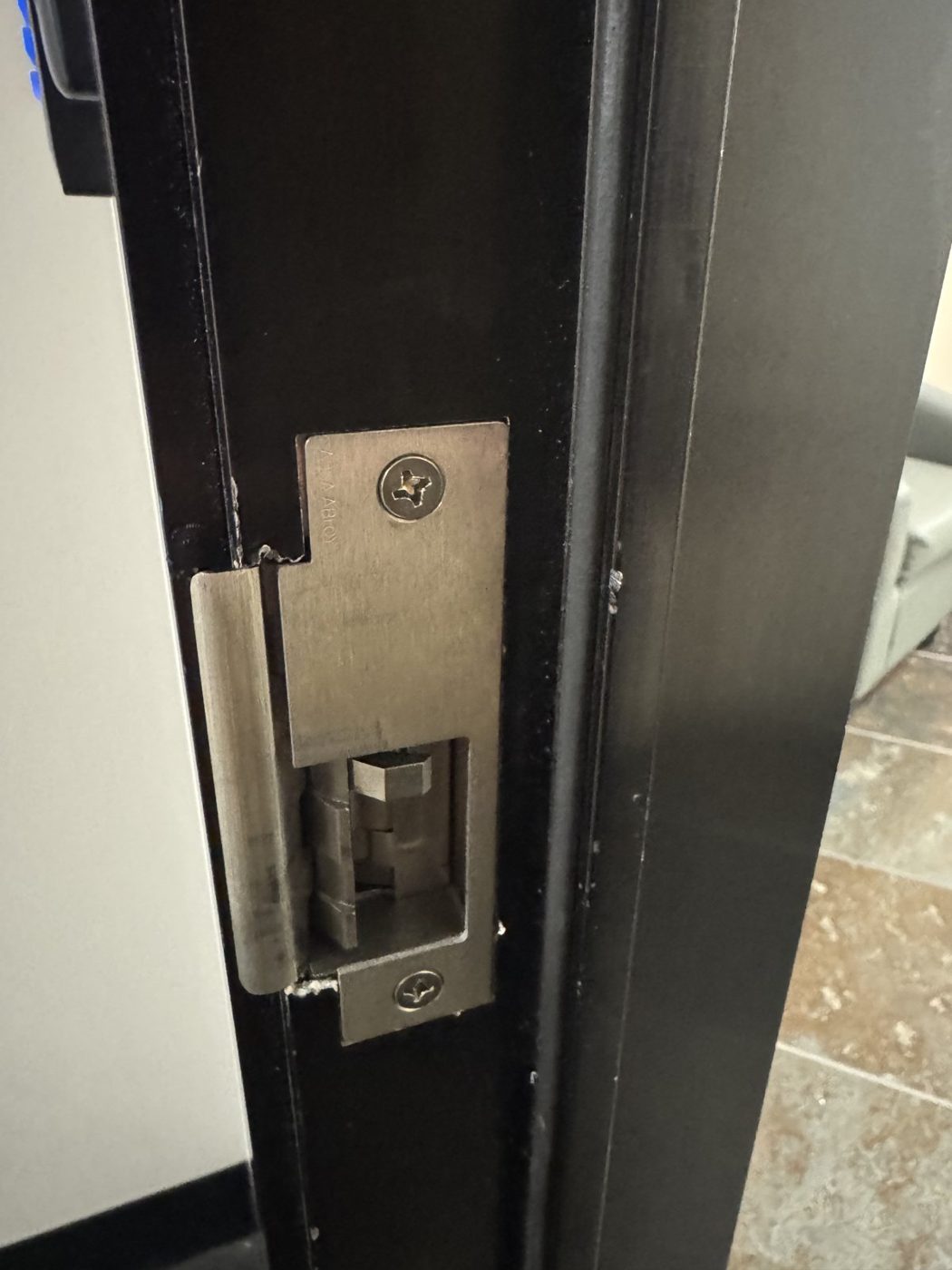
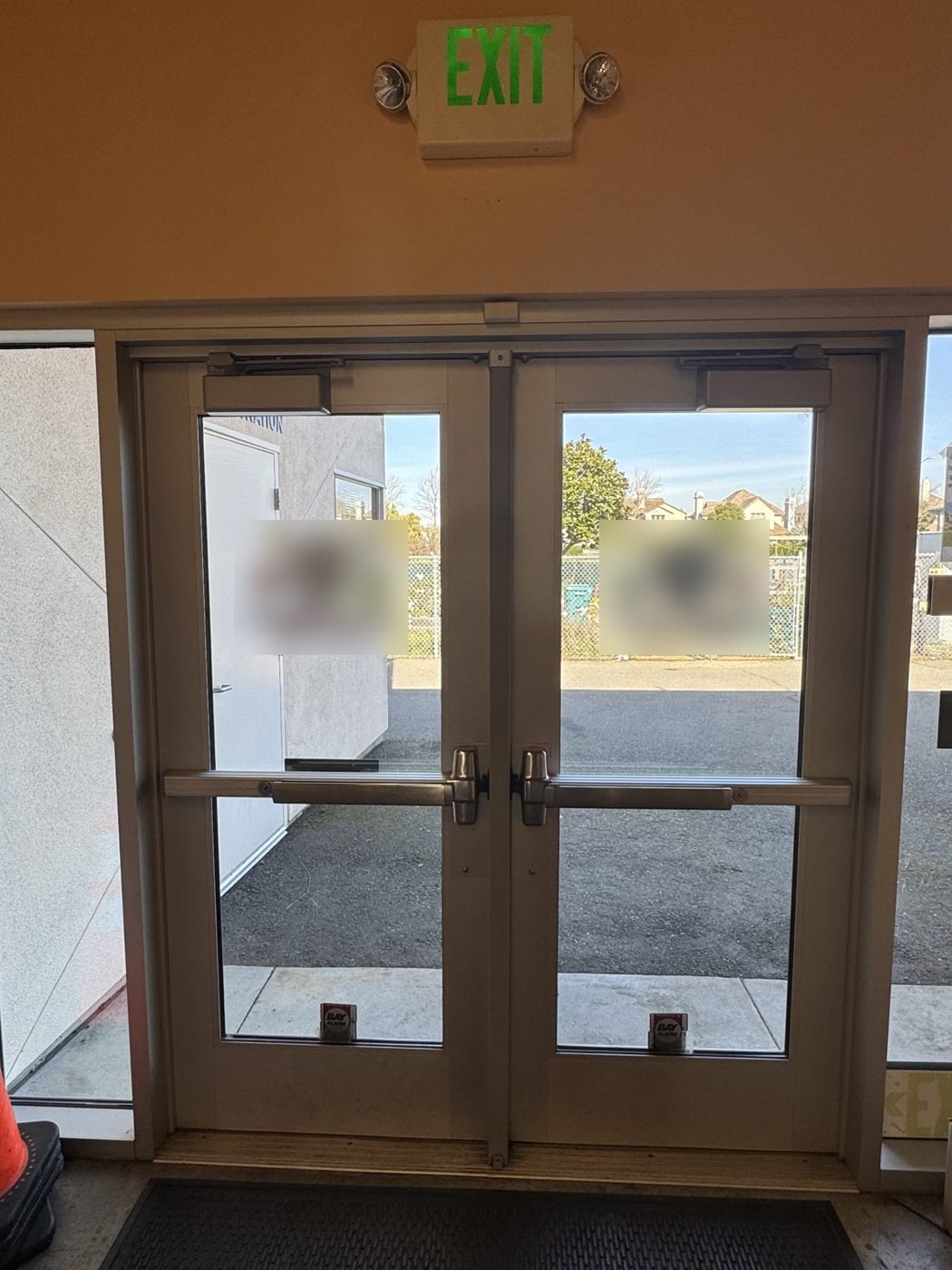
- An electrified lock, strike or panic device that releases when the reader says yes. On many office doors that means an electric strike in the frame. On doors with a push bar, we electrify the panic hardware.
- A way out. Exiting must stay simple and code-compliant. With an electric strike or electrified panic hardware, people leave the way they always have: turn the lever or push the bar.
- Low-voltage wiring and a controller that connects the reader, the lock and the software.
- A plan for power loss, so the door behaves the way you want during an outage.
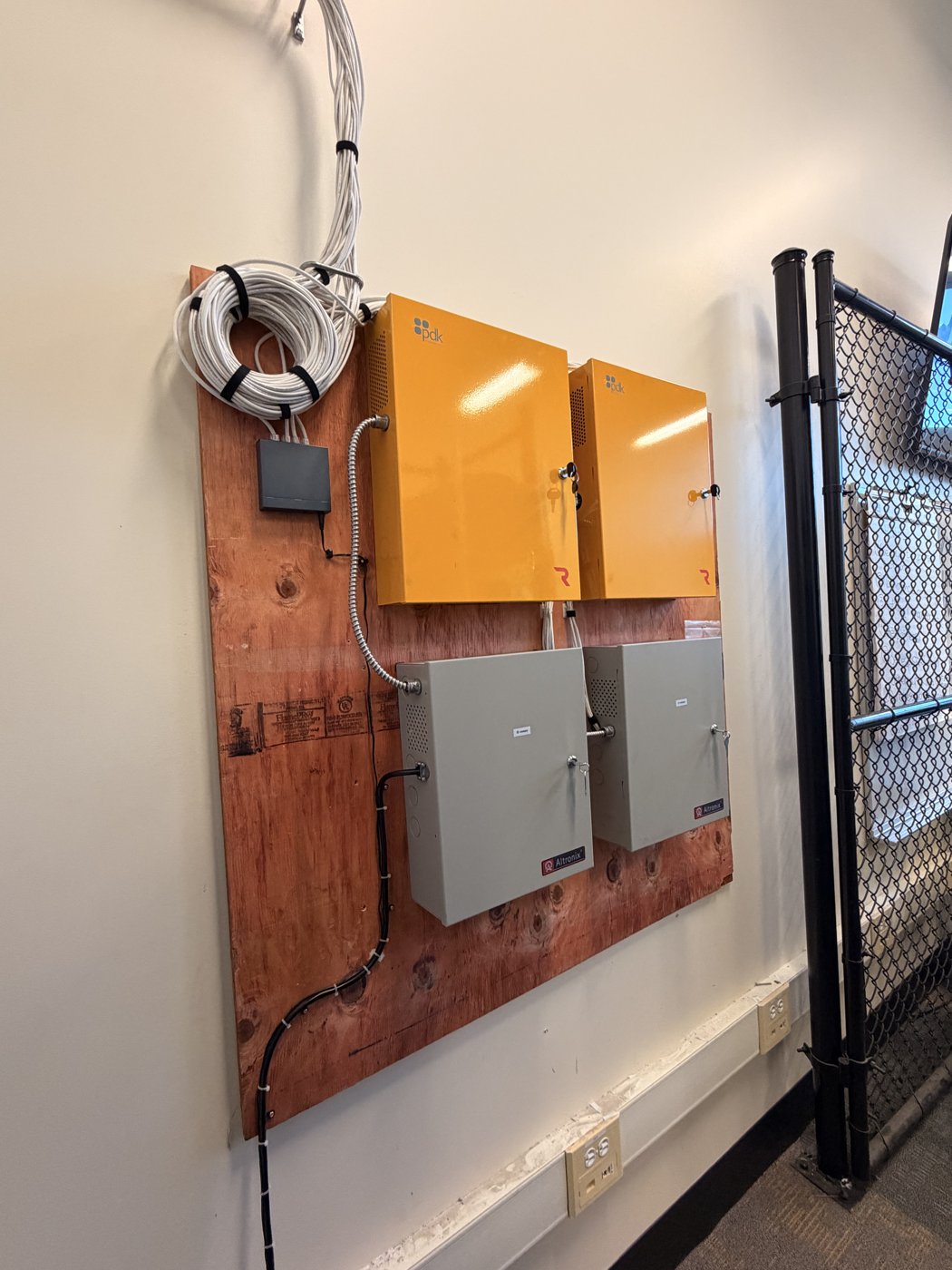
This is why door hardware experience matters as much as the electronics. As a C-28 licensed locksmith that also installs and repairs electrified door hardware and low-voltage systems, B&B handles the whole door, not just the box on the wall.
Already have a system that is acting up?
You don't always need a new one. Readers that stop responding, doors that won't latch, and keypads that stopped taking codes are common repair calls. Often the fix is a strike adjustment, a wiring fault or a failed power supply.
Which should you choose?
A quick rule of thumb:
- Small office or practice, under about 25 people: fobs, possibly with phone access for managers.
- Team already wears badges: keycards.
- Back doors, storage, vendor entries: a keypad, ideally with individual codes.
- More than one door or location: a cloud-managed system so you can add and remove people from one screen.
The right answer depends on your doors, how many people come and go, and whether you rent or own. That is what a site visit is for.
Book a free on-site assessment
If you're in Walnut Creek, Concord, Pleasant Hill, Lafayette, Martinez, Danville, San Ramon, Dublin or Benicia, B&B will come out, look at your doors and tell you plainly what would work and what it involves. B&B is licensed, bonded and insured.
Call 415-423-0182 or text 925-266-3393 to book your free on-site assessment. More on our access control installation.
FAQ
Can I add a key fob lock to my existing office door? Usually, yes. Most standard commercial doors can take an electric strike or electrified lock plus a reader. We confirm what your door and frame need during the free assessment.
What happens if an employee loses their fob? You deactivate that one fob and issue a new one. Nobody else's access changes and no locks need rekeying.
Can my phone open the door instead of a fob? With systems like PDK and Verkada, yes. Employees use an app on their phone, and you can still give fobs to anyone who prefers one.
Will people still be able to get out if the power goes out? Exiting has to stay possible at all times. People still leave by turning the lever or pushing the bar, and we plan how each door behaves during an outage before installation.
Do you repair systems another company installed? Yes. B&B repairs readers, keypads, electric strikes, maglocks and low-voltage wiring on existing systems.