When a business owner calls us about adding a card reader to a door, a lot of them ask for a maglock. It makes sense. Maglocks are everywhere, and they look simple.
We don't install many of them, and that's on purpose. On most commercial doors there's a better way to lock and unlock the door from a card reader, keypad or app. Here's how we think about it.
What a maglock actually does
A maglock is an electromagnet mounted at the top of the door frame, with a steel plate on the door. When it has power, it holds the door shut. Cut the power and the door opens.
The catch is that it holds the door at one spot, usually the top corner. And because the magnet is the lock, the door has to release every time someone needs to walk out. That's where the extra parts come in.
To let people out safely, a maglock setup usually needs:
- A motion sensor on the inside to release the door when someone walks up
- A push-to-exit button next to the door
- A tie-in to the fire alarm so the door releases in an emergency
- On some doors, an emergency power cutoff switch
Each of those is one more part to buy, wire and keep working. When the door won't open or won't lock, you have three or four things to check.
Option 1: Electrified panic hardware
This is our first choice for most commercial doors that already have, or need, a panic bar.
A panic device is push and go. Anyone inside pushes the bar and walks out, no sensor or button needed. That's why it meets code by design. We just electrify it, so your card reader, keypad or access control system can unlock it from the outside.
It also holds the door better. Depending on the door, a panic device can latch in the center of the door (rim), at the top and bottom with surface or concealed vertical rods, or at more than one point. Compare that to a maglock holding one corner.
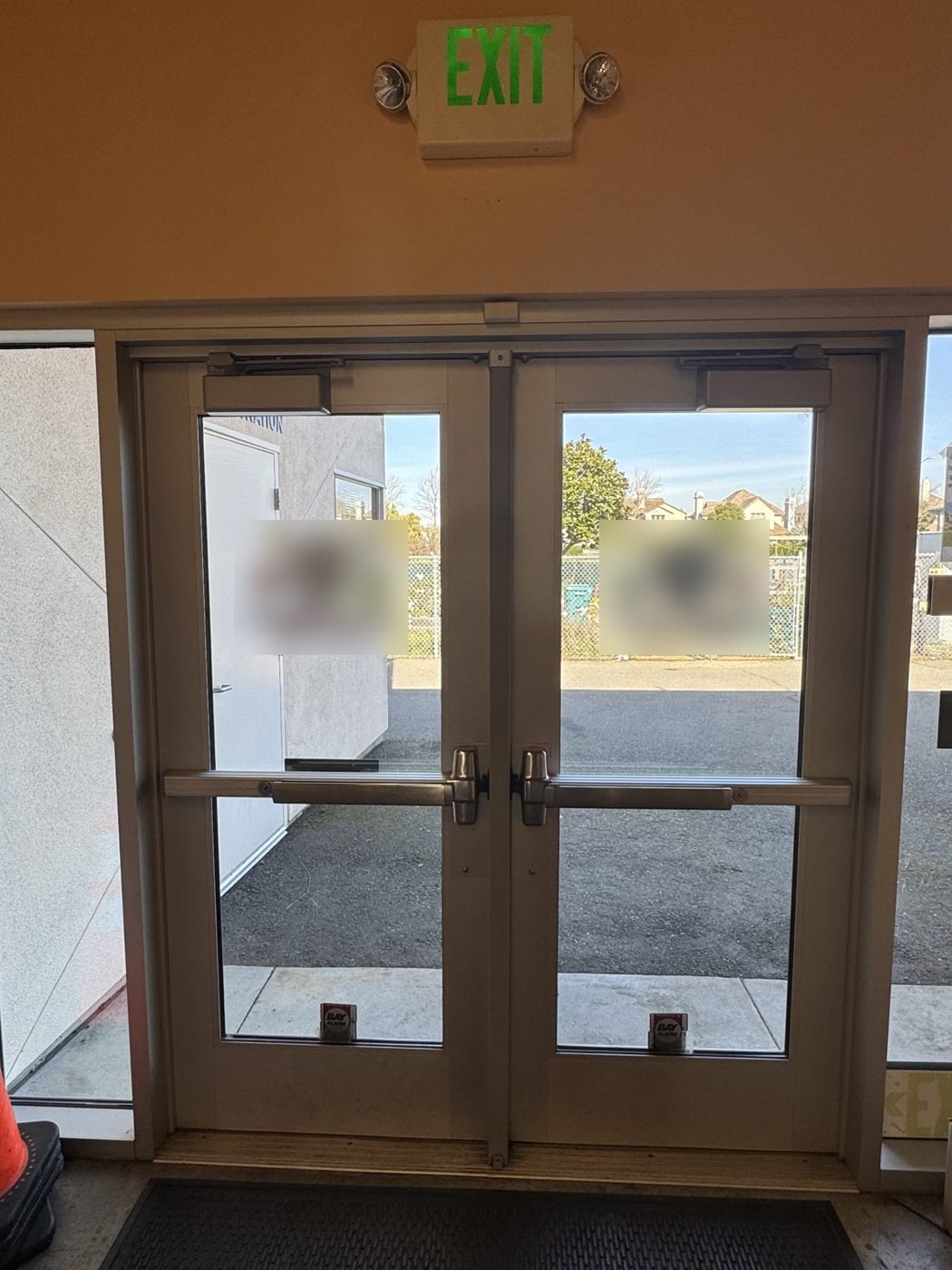
On the double doors at a youth center in Alameda, we used electrified Von Duprin 99 devices. The doors unlock from the access system, and anyone inside just pushes the bar to walk out. One device per door does the whole job.
Option 2: The electric strike
An electric strike replaces the strike plate in the door frame. The lock on the door stays the same. When the strike gets a signal from the reader, it lets the latch swing free and the door opens.
From the inside, people still turn the lever or push the bar like they always have. Nothing changes for them. It's a clean fit for office doors, suites and interior doors with a lever lock.
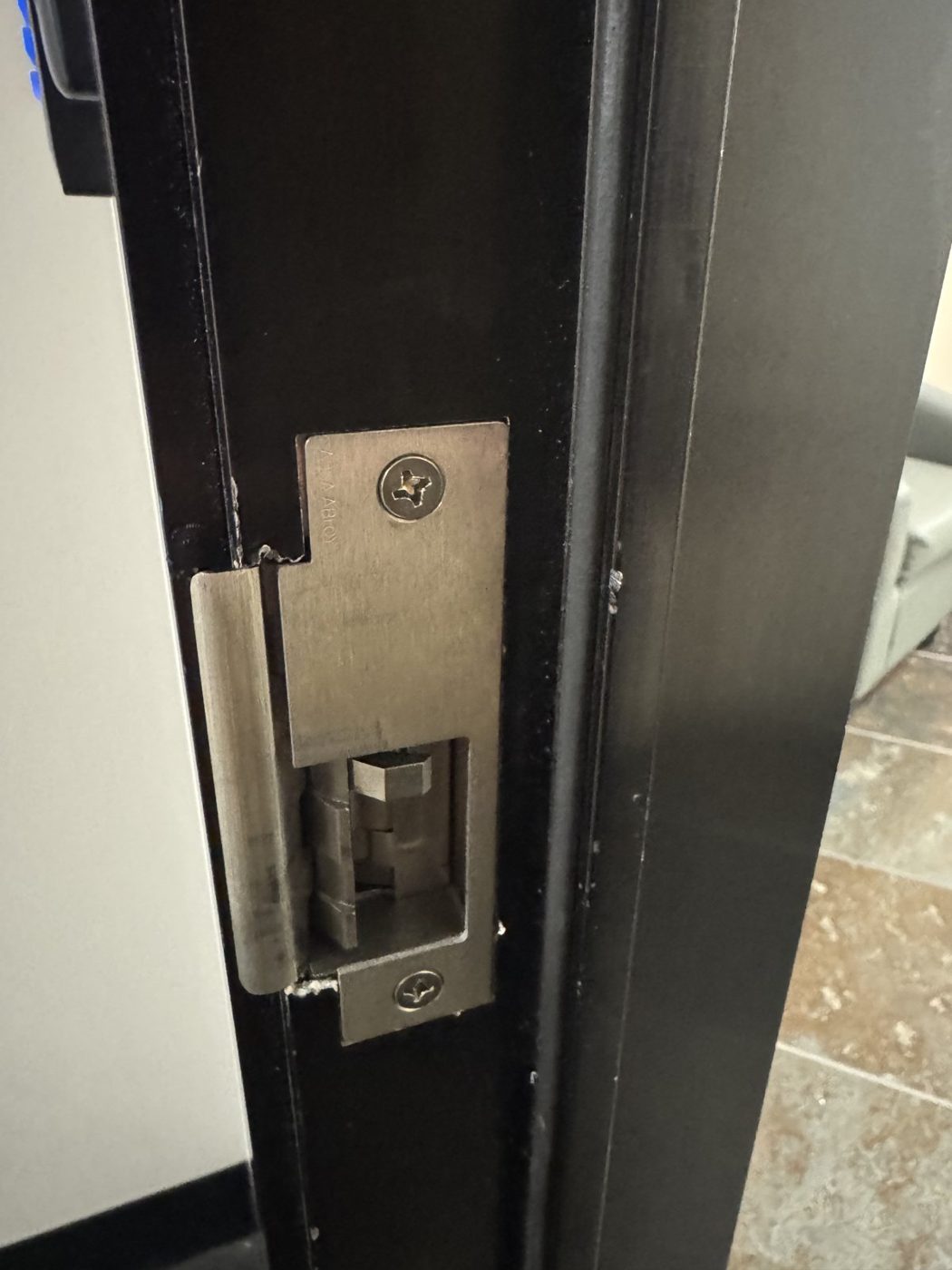
We install a lot of these, in hollow metal frames, aluminum storefront frames and even welded into steel gates.
When the door needs to buy you time
Some businesses have a different problem: people walking out a back or side exit with merchandise. For those doors we install delayed egress panic hardware.
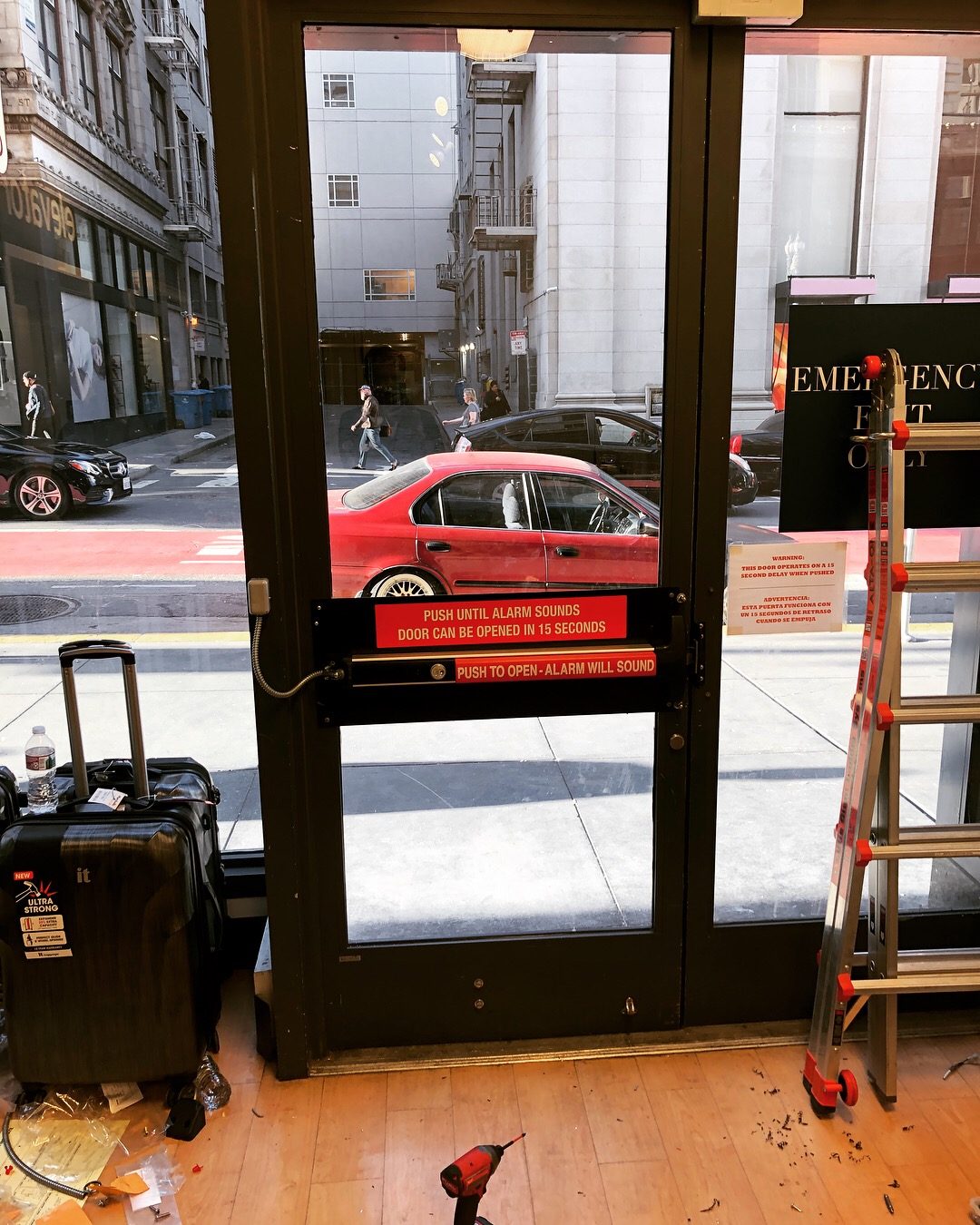
On a storefront we did in San Francisco, we used an alarmed Detex device. Push the bar and an alarm sounds right away. The door opens after 15 seconds. Staff hear it and have time to respond, and the door still lets people out.
Why fewer parts matters
With an electrified panic device or an electric strike, the lock is one device. If something stops working, we know where to look, and the fix is usually quick. With a maglock, the problem could be the magnet, the sensor, the button, the power supply or the fire alarm relay.
Fewer parts means fewer service calls, fewer doors stuck open overnight and less to explain to the fire inspector.
So, do we ever install maglocks?
Sometimes. There are doors where a maglock is the only practical choice. But on most commercial doors, an electric strike or electrified panic hardware is the stronger, simpler setup, and that's what we'll recommend.
Not sure what your door needs?
Send us a photo of the door and the hardware on it, and tell us how you want people to get in. We'll tell you what fits. B&B Locksmith & Security has been installing access control and commercial door hardware in the Bay Area since 2011.
Call (415) 423-0182 or text (925) 266-3393 for a free assessment.