A visitor shows up at your front door. How do they get in? In a lot of offices, the answer is someone walking out to open it, again and again, all day. In apartment and multi-tenant buildings, it might be an old call box that half the residents can't use anymore.
A door buzzer or intercom fixes that. Someone at the door presses a button, you talk to them (and often see them), and you let them in from your desk or your phone. The right setup depends on your building, your door and how many people need to answer.
The main options, in plain language
Basic door buzzer. A button outside and a release button inside. Press it, the door unlocks for a few seconds. Simple and reliable for a small office where the front desk can see the door.
Audio intercom. Adds two-way talk, so you can ask who's there before you buzz them in. Good for back doors, deliveries and suites where you can't see the entrance.
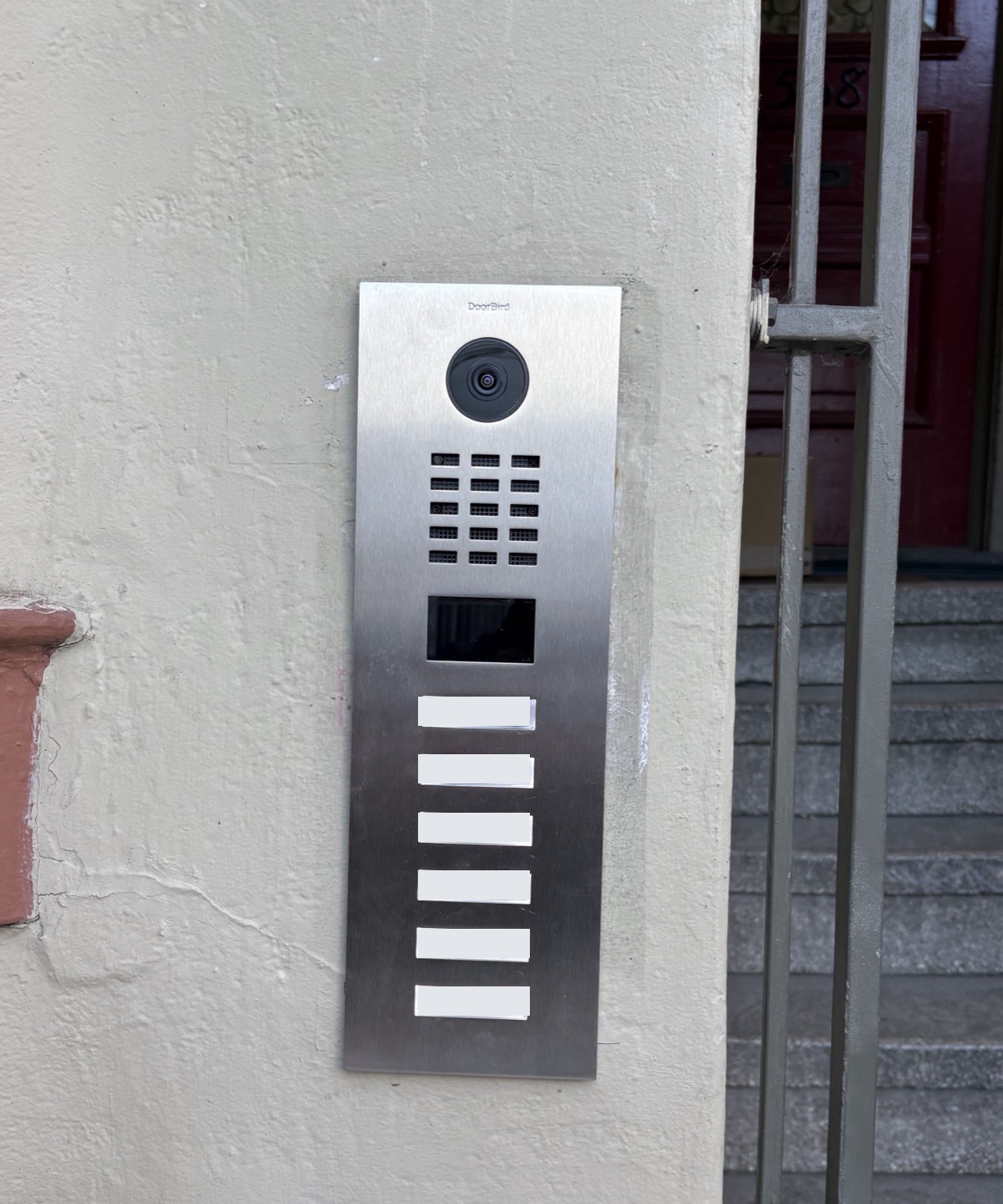
Video intercom. A door station with a camera, so you see who's at the door on a screen or in an app. Systems like DoorBird let staff answer from a phone, which helps when no one is sitting at the front desk.
Apartment or building call box. A directory panel at the main entry. Visitors find a tenant's name and call them, and the tenant lets them in. Common for apartments, condos and multi-tenant office buildings.
Intercom tied to key fob entry. Many buildings combine the two: tenants and staff use key fobs or keycards, and visitors use the intercom. When they work together, you manage both from one place.
What actually unlocks the door
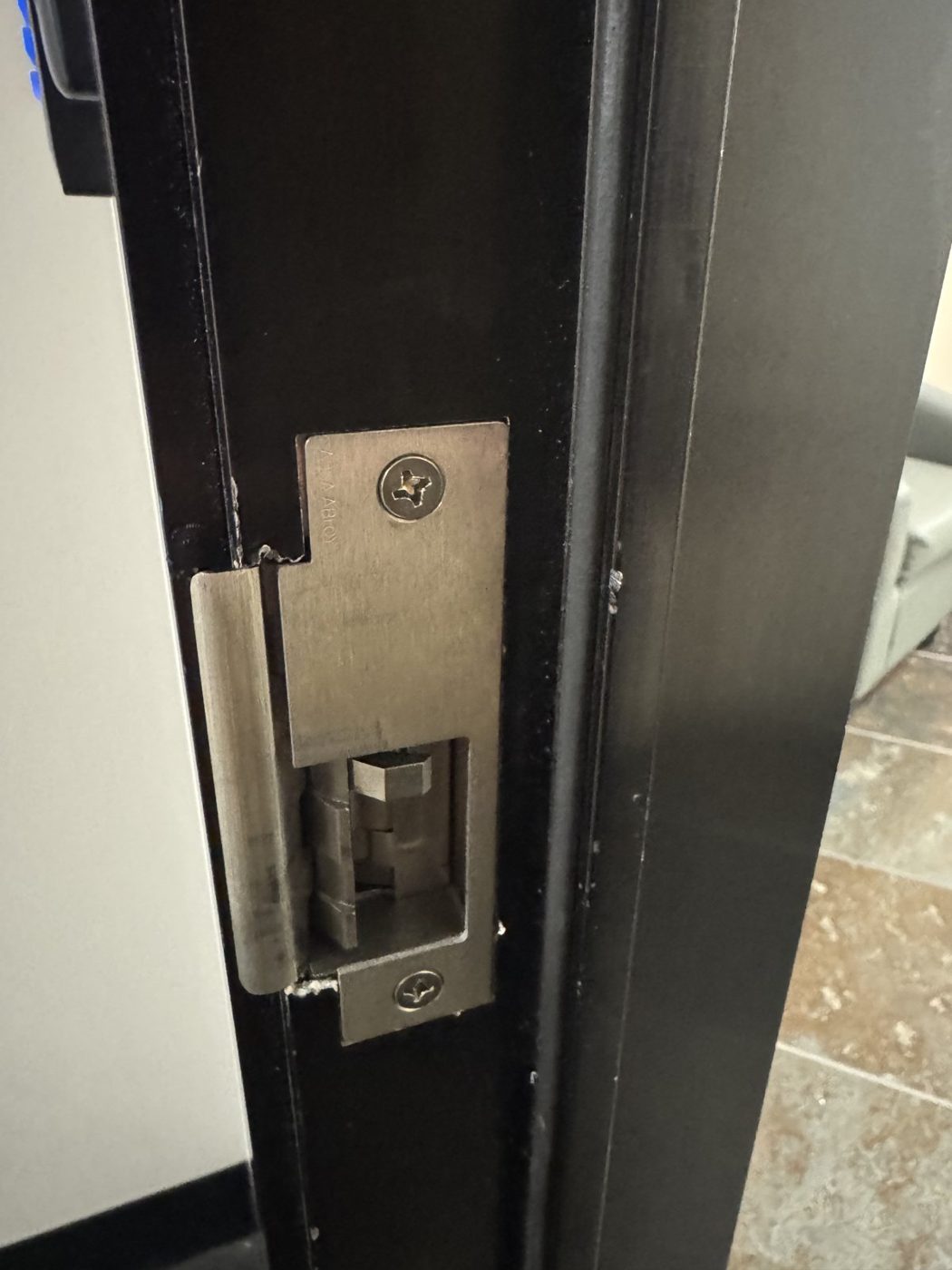
The intercom is only half the job. The door needs electrified hardware that can unlock on command. Usually that's one of these:
- Electric strike: replaces the strike plate in the door frame and releases the latch when it gets power or loses it, depending on the type.
- Electrified panic hardware: the push bar itself is electrified. People push to get out like always, and the intercom unlocks it from outside. This is our first choice on doors with a panic bar.
- Electrified lever: the lock is built into the handle.
- Magnetic lock: a magnet at the top of the door. We install fewer of these, because a maglock also needs a motion sensor, an exit button and a fire alarm tie-in to let people out. Here's why.
The door, the frame and how people exit in an emergency all affect which one fits. That's why we look at the door before recommending an intercom.
Which one is right for you?
- Small office, front desk can see the door: a basic buzzer or audio intercom is often enough.
- Office with no full-time receptionist: a video intercom you can answer from a phone.
- Medical or dental office: an intercom at the staff or back entrance so deliveries and late patients don't wander in unannounced.
- Restaurant or retail back door: an audio or video station so staff can check deliveries before opening.
- Apartment or multi-tenant building: a call box or directory panel, ideally paired with key fobs for residents.
Already have an intercom that doesn't work?
Old buzzer systems fail in a few common ways: the button outside works but the door won't release, you can hear the visitor but they can't hear you, or the system is so old parts are hard to find. Sometimes it's the door hardware, sometimes the wiring, sometimes the intercom itself. We repair intercoms and buzzer systems, and if a repair doesn't make sense, we'll tell you what a replacement would reuse, such as existing wiring or door hardware.
Questions to answer before you call
- Which doors need it: front, back, or both?
- Who answers: one front desk, several staff, or individual tenants?
- Do you want to see visitors, or just talk to them?
- Do you already use key fobs or keycards?
- What kind of door is it: glass storefront, metal, wood?
Intercom installation and repair in Contra Costa County
B&B Locksmith & Security is a C-28 licensed, bonded and insured locksmith based in Walnut Creek, serving the Bay Area since 2011. We install and repair door buzzers, intercoms and video door stations, and the electric strikes, electrified panic hardware and exit buttons that make them work. We also install key fob and keycard entry systems from PDK, Verkada and CDVI, so your intercom and your door access can work together.
We serve offices, medical and dental practices, retail stores, restaurants and property managers in Walnut Creek, Concord, Pleasant Hill, Lafayette, Martinez, Danville, San Ramon, Dublin and Benicia.
Book a free on-site assessment
Tell us about your door and how you want visitors to get in. We'll come out, look at the door and wiring, and recommend the simplest setup that does the job.
Call 415-423-0182 or text 925-266-3393.
FAQ
What's the difference between a door buzzer and an intercom? A buzzer just unlocks the door when someone presses a button. An intercom adds two-way talk, and a video intercom adds a camera so you can see who's there.
Can I answer the door from my phone? With a video intercom like DoorBird, yes. Staff can see and talk to visitors and unlock the door from an app.
Do I need to change my door lock to add an intercom? Usually the door needs electrified hardware, such as an electric strike or electrified panic hardware, so it can unlock remotely. We'll check what your door already has.
Can you fix an old apartment buzzer system? Often, yes. We repair intercom and buzzer systems and will tell you if a replacement makes more sense.
Can an intercom work with key fobs? Yes. Many buildings use key fobs for staff or tenants and an intercom for visitors.